AirDoctor AD3500: Manufacturer-Stated, Not Registry-Listed
The highest CADR ceiling we track - and a genuinely premium yearly cost to match
3.3/5Best for: very large homes, mixed multi-pet households, or anyone specifically prioritizing UltraHEPA-rated filtration and willing to pay the ongoing cost for it.

The AD3500 is the most expensive model we track to run - $172/year, because it needs two filters on two different schedules. That buys the highest CADR in this lineup, which matters in a large home with several pets and buys you nothing in a bedroom. This is a less common model than our Levoit and Winix picks, which is itself worth knowing - the pattern in who’s happy with this purchase and who isn’t traces almost entirely back to whether that scale actually matched their household.
The number that justifies the price: 815 sq ft
At 340 CFM CADR, the AD3500’s 2/3-rule ceiling works out to roughly 815 sq ft - the highest of any model we track, well beyond even the Blueair 211i Max’s already-generous 653 sq ft. That’s the entire case for this unit: a genuinely large open floor plan, or a household that would otherwise need two smaller units running simultaneously, can run one AD3500 instead.
That framing clarifies a lot. In this exact situation - a big open-concept main floor, or a home with cats, a dog, and sometimes a bird all contributing to the air quality load - the extra CADR is what actually kept pace without running flat-out on its highest, loudest setting all day. Owners in a normal-sized bedroom or living room, by contrast, more often describe it as more than they needed, which isn’t a knock on the product so much as a mismatch in who bought it.
UltraHEPA: what it actually is, and what it isn’t
Checked directly against AirDoctor’s own site: UltraHEPA uses H13-grade filter media - the same industry grade classification used in standard True HEPA filters, not a different or lesser one - and AirDoctor states it’s independently tested to capture at least 99.97% of particles down to 0.003 microns, roughly 100 times smaller than the standard HEPA benchmark of 0.3 microns. The filter grade and the 99.97% threshold both check out as real, industry-standard terms, not invented marketing language.
The one place the claim is thinner than it should be: AirDoctor doesn’t name the specific lab or certification body behind that “independently tested” figure anywhere we could find. That’s a real gap, not a nitpick - compare it to the PuroAir 240 elsewhere on this site, whose (differently specced) filter cites a named ISO 17025-certified lab. We’re treating AirDoctor’s H13 grade and 99.97% figure as credible because the underlying spec is a standard, checkable industry classification, not a proprietary number invented for marketing - but “independently tested” without naming who did the testing is a step below what a fuller disclosure would look like.
Separately from whether the claim holds up: it’s worth being honest about how much any of this matters for a typical cat or dog household specifically. Pet dander (roughly 5-20 microns) and hair (50-plus microns) sit comfortably within what standard HEPA filtration already captures with ease; the finer capture UltraHEPA is built around matters more for use cases like wildfire smoke or extremely fine particulate than for the dander and litter dust this site is mostly written about. None of that makes it a bad spec to have - finer filtration is never a downside on its own - but if pet dander and hair are your only concern, it’s reasonable to view UltraHEPA as a nice-to-have on top of the CADR ceiling that’s the real reason to buy this specific unit, rather than the headline reason itself.
Is it worth it over the Blueair 211i Max?
This is the comparison most premium-tier shoppers actually make, based on what shows up in reviews mentioning both units. The honest answer: for most multi-cat households, the 211i Max’s lower yearly filter cost at a still-generous 653 sq ft ceiling makes it the more efficient choice. The AD3500 pulls ahead specifically once you’re past that ceiling - a genuinely larger home, or a mixed multi-pet household with a higher combined particulate load than even a multi-cat home generates - and for owners who specifically want the UltraHEPA filtration claim regardless of whether their square footage strictly requires the extra CADR.
What it costs to run
| Model | Role | CADR (CFM) | 2/3-rule room ceiling | Filter cost/yr | Filter life |
|---|---|---|---|---|---|
| AirDoctor AD3500 | Two filters, highest upfront and running cost | 340 | ~510 sq ft | ~$172 (2 filters) | 12mo UltraHEPA / 6mo Carbon/VOC |
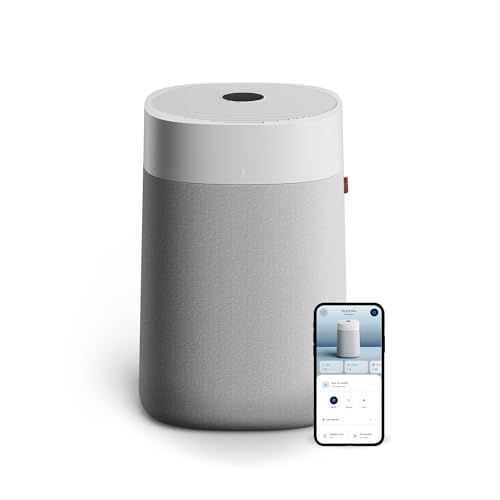
| Blueair Blue Pure 211i Max | Large rooms & multiple pets | 435 | ~653 sq ft | ~$93 · sub. $79 | up to 9 months |
| Levoit Vital 200S-P | Best overall for cats | 250 | ~375 sq ft | $50-100 | 6-12 months |
The AD3500’s yearly filter cost is meaningfully higher than either the 211i Max or the Vital 200S - the clearest, most direct number to weigh against how much of its CADR ceiling and filtration spec you’ll actually use before deciding this is the right tier for your household.
What owners actually report
- Large-home owners describe it as the unit that finally kept pace, specifically contrasting it with a smaller unit that ran constantly on its highest, loudest setting just to hold steady.
- Mixed multi-pet households (cats plus a dog, sometimes a bird) report the clearest satisfaction, consistent with the CADR math - this is a unit built for a genuinely higher combined particulate load than a single-species home generates.
- A recurring theme in more lukewarm reviews is buyer’s remorse over the price relative to a smaller-space use case - owners who bought it for a standard bedroom or living room and, in retrospect, describe a cheaper model as having been sufficient.
- The UltraHEPA claim gets mentioned specifically by owners with broader air-quality concerns (wildfire smoke season, general allergies) rather than exclusively pet-dander-focused buyers - a sign the spec is doing real work for a wider use case than this site’s pet-specific angle alone.
- Noise on the higher settings is a more common complaint here than on smaller units, though largely from owners running it in a smaller room than it’s designed for - in the large space it’s actually sized for, the same fan speed reads as proportionate rather than excessive.
The filter-replacement experience, at this price point
At this tier, the filter replacement process itself gets more scrutiny in reviews than it does for budget or mid-range units, and it’s worth being precise about it: the AD3500 doesn’t use one combined cartridge, it uses two separate filters on two different schedules. The UltraHEPA filter is rated for 12 months; the Carbon/VOC filter underneath it is rated for 6, per AirDoctor’s own maintenance guidance - meaning the unit is actually due for some filter change twice a year, not once. AirDoctor’s own “1-Year Filter Combo Pack” (1 UltraHEPA plus 2 Carbon/VOC filters, priced as a set) is the realistic way to budget for this, and it’s the number we now publish as the annual cost. The higher per-year total reflects that two-filter reality plus the cartridges’ size and filtration spec, not an unusually short lifespan on either part.
A note on where this fits in a mixed-species household
A house with two cats, a beagle and a cockatiel is a common case for this site, and it’s worth being specific about how a unit at this CADR tier fits that kind of mixed-pet reality, since it’s a meaningfully different scenario than any single-species review can fully capture. A household with that combination is generating dander, hair, and dust from genuinely different sources at once, and the review pattern from similarly mixed households consistently favors a higher-CADR unit run continuously over multiple smaller units cycling on and off - fewer devices to maintain, and less risk of any one room being under-covered because a smaller unit’s owner assumed “close enough” was good enough.
Video review
Independent video review by World's Greatest Dad
Blueair Blue Pure 211i Max
4.4/5Honest downsides
- A yearly filter cost well above the Blueair 211i Max or Levoit Vital 200S - and built from two separately-scheduled filters (UltraHEPA every 12 months, Carbon/VOC every 6), not one. This is the single biggest factor to weigh before buying - confirm your space and pet count genuinely need the ceiling before paying for it.
- It’s genuinely oversized for a standard bedroom or living room. A smaller, cheaper unit performs just as well in that context, at a lower ongoing cost.
- UltraHEPA’s finer filtration matters less for pet dander specifically than for broader air-quality use cases - a real spec, but not the primary reason to buy this for a pet-only household.
- Higher fan speeds are more noticeable than on smaller units when run in a room smaller than what it’s designed to cover.
A realistic first-week setup
- Measure the room, honestly - confirm it’s genuinely approaching or exceeding the roughly 815 sq ft ceiling before assuming this tier is the right fit over the Blueair 211i Max.
- Count your total pet load, not just cat count - this is the unit that pulls ahead specifically in mixed multi-pet households, not single-cat ones.
- Start on a mid fan speed rather than the top setting, and adjust based on how the room actually feels rather than defaulting to maximum.
- Budget for the higher filter cost from day one - it’s the clearest, most predictable downside, and there’s no way to avoid it while keeping the unit’s filtration intact.
- Reconsider the 211i Max first if your space is under roughly 653 sq ft - it covers the same use case at a lower ongoing cost.
Alternatives worth knowing about
- For most multi-cat homes under roughly 653 sq ft, the Blueair 211i Max covers the same ground at a lower yearly filter cost.
- For a single- or two-cat home in a standard-sized room, our Levoit Vital 200S review is the more efficient, better-value pick.
- For the full sizing math specific to multi-cat households, see our best air purifier for multiple cats guide.
Browse the full cat air purifier hub for every guide in this silo.
Frequently asked questions
Is the AD3500 actually worth it over the Blueair 211i Max?
For most multi-cat homes, the 211i Max's lower yearly filter cost makes it the more efficient choice at a similar CADR tier. The AD3500 pulls ahead specifically for very large homes, mixed multi-pet households, or owners who want its UltraHEPA filtration claim and don't mind paying more per year in filters for the extra ceiling.
What does UltraHEPA actually mean, and is it marketing?
It's AirDoctor's name for filtration built on H13-grade filter media - the same industry grade used in standard True HEPA filters - tested, per AirDoctor, to capture 99.97% of particles down to 0.003 microns, about 100 times finer than the standard HEPA benchmark of 0.3 microns. The filter grade and the 99.97% threshold are both real, checkable industry specs, not invented marketing terms. The weak point in the claim is that AirDoctor doesn't name the specific lab behind the 'independently tested' language. Whether the extra fine capture matters in a typical cat household is a separate question - most pet dander and hair sits comfortably within what standard HEPA already catches easily.
How much more does it actually cost to run per year?
Its filter cost is noticeably higher than the Blueair 211i Max or Levoit Vital 200S - around $172/yr, using AirDoctor's own official 1-year filter bundle price, which covers both the UltraHEPA filter (replaced every 12 months) and the separate Carbon/VOC filter (replaced every 6 months). That's the direct tradeoff for its CADR ceiling and filtration claims, and worth weighing against how much of that headroom you'll actually use.
Is it overkill for a normal household?
For most single- or two-cat homes under about 500 sq ft, yes, based on the CADR math - you're likely paying for ceiling you won't reach. It earns its high running cost specifically in very large homes or mixed multi-pet households with a genuinely higher combined particulate load; anywhere smaller, that cost isn't buying you anything you'll use.