Levoit Vital 200S: The Registry Number Is Higher Than the Box Says
Still our overall pick for cat homes, for one unglamorous reason
4.6/5Best for: one or two cats in a room up to about 388 sq ft, where hair and dander - not just litter odor - are the main complaint.

We have written about the Vital 200S before in the context of litter box smell specifically - see our pillar guide if that’s your main complaint. This piece is narrower and goes deeper: it’s about the unit itself, independent of any one use case.
That distinction matters more than it sounds like it should. A lot of “best purifier for X” content picks a winner and moves on to selling it. What we wanted to know here is something different: after people actually live with this specific unit for a while, what do they keep saying - good and bad - regardless of why they originally bought it?
The pattern that shows up more than any other: the pre-filter
If there’s one thing that separates a five-star Vital 200S review from a three-star one, it’s not CADR, noise, or even price. It’s whether the owner understood, going in, that “washable pre-filter” means an ongoing five-minute habit, not a maintenance-free feature. Owners who rinse it regularly report consistent performance for months. Owners who don’t are disproportionately the ones describing the unit as “seeming to slow down” a few months in - which isn’t the HEPA or carbon filter failing, it’s airflow being throttled by a clogged pre-filter stage sitting in front of them.
The mechanical reason this matters: a purifier’s pre-filter exists to catch large debris - hair, big dust clumps - before it reaches the finer, more expensive HEPA and carbon layers. In a cat home, that pre-filter is doing dramatically more work than in a pet-free one, and it clogs accordingly fast. A washable one breaks that cycle; a non-washable one (like the one on the budget-tier Core 300) means you’re either replacing filters more often or living with reduced airflow between replacements.
What the app is actually good for - and what it isn’t
The VeSync app that pairs with the Vital 200S gets a genuinely mixed reception, and it’s worth separating the two halves rather than treating “the app” as one feature. The air-quality-triggered auto mode - where the fan speed ramps up automatically when the built-in sensor detects a spike (cooking, scooping, dust from cleaning) - is the feature owners cite most often as the reason they keep the app installed. It’s the closest thing to “set it and forget it” that a mid-range purifier offers.
The filter-life notification is the other half, and it’s where the complaints concentrate. It’s calibrated conservatively - the “replace soon” push notification arrives well before the filter is actually spent, by any practical inspection, needed replacing. That’s a minor annoyance rather than a real flaw, but it’s common enough in the review data that it’s worth knowing about before you buy, so you’re not caught off guard wondering if you got a defective unit.
Sizing: the 2/3 rule, applied honestly
Levoit’s own site lists the Vital 200S at 380 sq ft. The AHAM Verifide record for this exact model (LAP-V201S-AUSR) shows a 250 CFM smoke CADR and a 388 sq ft room-size rating - both a little higher than Levoit’s own marketing figure, not lower. Using the 2/3 rule - CADR (in CFM) should be at least two-thirds of the room’s square footage for a meaningful air-change rate - that AHAM-verified CADR works out to roughly 375 sq ft, which lines up closely with the registry’s own room-size number. Unlike a couple of other models in this lineup, the independently tested figure here doesn’t undercut the box; if anything, it’s a little better than advertised.
Where owners run into trouble isn’t the math, it’s the room. “Living room” and “bedroom” cover an enormous range of actual square footage, and a fair number of underwhelmed reviews trace back to a unit placed in a room meaningfully larger than either number above - an open-concept living/dining/kitchen combo, for instance, easily runs 500+ sq ft, well past this unit’s comfortable ceiling. If your space is on the larger or more open side, the Blueair 211i Max, with a 653 sq ft 2/3-rule ceiling, is the more honest fit.
What it actually costs to run
| Model | Role | CADR (CFM) | 2/3-rule room ceiling | Filter cost/yr | Filter life |
|---|---|---|---|---|---|
| Levoit Vital 200S-P | Best overall for cats | 250 | ~375 sq ft | $50-100 | 6-12 months |
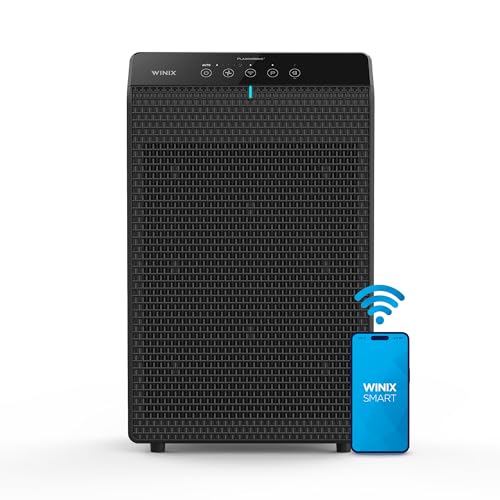
| Winix 5520 | Best for odor | 253 | ~380 sq ft | ~$80 | 12 months |
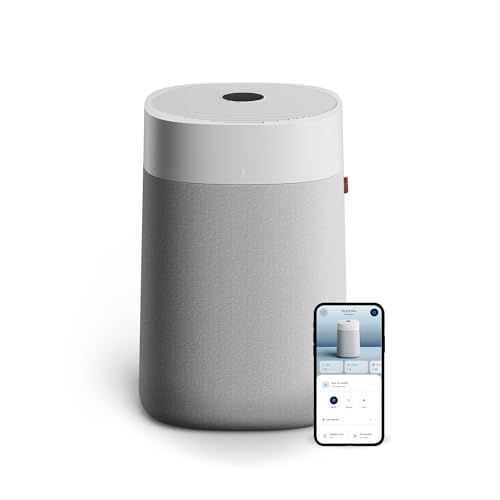
| Blueair Blue Pure 211i Max | Large rooms & multiple pets | 435 | ~653 sq ft | ~$93 · sub. $79 | up to 9 months |
The Vital 200S’s yearly filter cost is a range, not a fixed number - Levoit rates the filter for 6 to 12 months depending on load. At the low end, closer to the 12-month estimate, it beats both the odor-focused Winix 5520 and the higher-CADR Blueair 211i Max on cost; at the high end, closer to 6 months and more typical in a heavy-shedding or multi-cat home, it can run higher than either. The washable pre-filter is what determines which end you land on - rinsing it consistently is what stretches the HEPA and carbon layers toward the cheaper end of the range.
What owners actually say, sorted by what they mention most
- “I forgot it was even running” is the single most repeated sentiment, specifically about the lower fan speeds. On the top speed, in a quiet bedroom, some owners do find it noticeably audible - worth knowing if you’re a light sleeper and plan to run it in a bedroom overnight.
- Placement changes the outcome more than any other single factor. Owners who placed it within a few feet of a litter box or a cat’s favorite napping spot report the clearest results. Owners who tucked it in a corner across an open room report a noticeably smaller effect - a purifier only processes the air that reaches it.
- Multi-cat households report a genuinely different maintenance rhythm. Rinsing the pre-filter weekly rather than monthly, and replacing the main filter closer to the 4-6 month mark rather than stretching toward Levoit’s full 12-month estimate, are both common adjustments described by owners with two or more cats.
- A recurring 3-star complaint is that auto mode ramps up more aggressively - and audibly - than expected. Switching to a fixed manual speed resolves this for most people who mention running into it.
- A notable minority of reviews mention the unit doing double duty as a home-office air quality improvement, separate from the original pet-odor reason for buying it - several remote workers specifically call out appreciating the steady low-level white noise and cleaner air in a room they’re in for eight-plus hours a day.
- Build quality gets described as solid but plastic-forward. It’s not flimsy, but it feels lighter than the metal-accented pricier competitors like the AirDoctor AD3500.
Video review
Independent video review by HouseFresh
Winix 5520
4.6/5Honest downsides
- The filter-life alert is calibrated conservatively. Expect a “replace soon” notification before the filter is actually spent - annoying, not dangerous, and easy to learn to ignore once you know the pattern.
- It’s a room unit, not a whole-house fix. Performance is strongest in the room it’s placed in; odor and dander that travel through a hallway into another room need a second unit there, not a louder setting on this one.
- The washable pre-filter still requires actual maintenance. “Washable” reduces the cost and hassle of upkeep - it doesn’t eliminate it. Reviews describing reduced performance are disproportionately from owners who skipped rinsing for a month or more at a stretch.
- The plastic-forward build isn’t for everyone. It’s functional and not cheap-feeling, but a step down from the material quality of pricier competitors, which is a fair tradeoff to know about going in rather than after.
- You’re committed to Levoit’s filter ecosystem. Replacement filters are model-specific, which is worth factoring into the multi-year cost picture, not just the first year.
A realistic first-week setup
- Measure the room before you unbox anything - confirm it’s under the roughly 375 sq ft ceiling.
- Place it within 3-5 feet of the main odor or dander source - a litter box or a favorite cat perch - rather than a convenient corner.
- Run auto mode for the first several days to get a baseline sense of how it responds to your household’s actual air quality swings.
- Switch to a fixed manual speed if auto mode’s ramping feels more aggressive than you’d like - the single most common early tweak in otherwise-positive reviews.
- Set a recurring reminder to rinse the pre-filter - weekly in multi-cat homes, monthly in single-cat ones - rather than waiting for a visible buildup.
Alternatives worth knowing about
- If ammonia-heavy litter box smell is your dominant complaint rather than general dust and dander, read our Winix 5520 review, or go straight to the head-to-head in Levoit Vital 200S vs. Winix 5520.
- For a larger or more open floor plan, or three-plus cats, the Blueair 211i Max below has meaningfully more CADR headroom, in a broadly similar yearly filter cost range.
- Deciding between this and the rest of the Levoit lineup? Our Core 300 vs. Vital 100S vs. Vital 200S comparison lays out exactly where the step-ups earn their keep.
Blueair Blue Pure 211i Max
4.4/5Browse the full cat air purifier hub for every guide in this silo, including litter-box-specific placement and multi-cat sizing.
Frequently asked questions
Is the Levoit Vital 200S actually worth the step up from the Core 300?
For most cat households, yes - the washable pre-filter and the higher CADR are the two upgrades owners mention most, and both matter more with a shedding pet in the house than they would in a pet-free home. If budget is the deciding factor and your room is under about 220 sq ft, the Core 300 is a genuinely reasonable place to stop instead. See our full breakdown in the Levoit lineup comparison below.
Does the app actually add value, or is it just a gimmick?
It's mixed. The auto mode and filter-life tracking are the two features owners consistently say they use; the air-quality-triggered automation is the most-cited reason people leave the app installed at all. The push notifications about filter replacement, on the other hand, are a common source of mild annoyance - several owners mention the alert arriving well before the filter is actually spent.
How many cats can one unit realistically keep up with?
Based on the CADR math, one Vital 200S comfortably handles one or two cats in a room under roughly 388 sq ft (the AHAM Verifide room-size rating - slightly higher than Levoit's own 380 sq ft marketing figure). Owners with three or more cats, or a larger open floor plan, more commonly report needing either a second unit or sizing up to something with more CADR headroom, like the Blueair 211i Max.
Is it safe to run continuously in a home with a bird as well as cats?
Yes - it's a mechanical HEPA and activated carbon unit with no ionizing mode, which is the detail that matters most for bird safety. There's no ozone-generating feature to accidentally leave switched on.