Best Air Purifier for Cat Litter Smell
The best pick for most cat homes - because of one boring feature
4.6/5Best for: single- and multi-cat homes up to about 388 sq ft, where litter box odor and shedding are the main complaints.

A house with several pets is a 24/7 dander factory, so “designed for pet owners” on the box means very little on its own. What settles it is the spec sheet: how much carbon is in the unit, and whether the pre-filter can be washed. If you’re not sure a purifier solves litter smell at all versus just reducing it, our explainer on what purifiers can and can’t do for litter smell is worth reading alongside this one.
The detail that matters most on the Levoit Vital 200S is not the CADR number. It is the washable pre-filter, because in a cat home that outer mesh collects visible cat hair off it under a tap and putting it right back in, instead of replacing a $15-20 filter every few weeks because it got clogged with fur before the carbon layer had done any useful work.
That’s the actual problem with running a “regular” air purifier in a cat home: the pre-filter stage clogs with hair long before the HEPA and carbon layers wear out, and once it’s clogged, airflow drops and the whole unit gets quieter but does less. A washable layer breaks that cycle, and it’s the kind of unglamorous detail that never makes it onto the box copy but shows up constantly in the reviews of people who’ve actually lived with the unit for months.
Go through enough purifier spec sheets and a pattern shows up: manufacturers spend their marketing budget on CADR numbers and app features, and buyers spend their reviews talking about maintenance friction. The products that win in the long run aren’t necessarily the ones with the biggest CADR - they’re the ones that are easy enough to maintain that people actually keep up with it.
The 2/3 rule: does the CADR actually cover your room?
Manufacturers publish a CADR (Clean Air Delivery Rate, in CFM) and a recommended room size, and that recommended size is often optimistic - checking manufacturer CADR against the independent AHAM Verifide registry across this site’s catalog turned up more than one case of exactly that. The rule of thumb I use instead: for a meaningful number of air changes per hour, a purifier’s CADR should be at least two-thirds of your room’s square footage, using the AHAM-verified number where one exists.
For the Vital 200S, that’s actually a rare exception: Levoit’s own site lists 242 CFM, but the AHAM Verifide record shows 250 CFM - a little higher, not lower. That works out to a ceiling of roughly 375 sq ft under the 2/3 rule, close to the registry’s own 388 sq ft rating. If your living room or bedroom is smaller than that, you’re not just meeting the minimum, you’re getting a genuinely aggressive filtration rate, which matters more when there’s a litter box in the room.
It’s worth actually measuring your room rather than eyeballing it. A “medium bedroom” can range anywhere from 130 to 250 sq ft depending on the house, and the difference between those two numbers is the difference between the Vital 200S running comfortably under its ceiling versus being pushed close to its limit. If you’re not sure, round up - a unit that’s oversized for the room just means it reaches steady-state filtration faster and can run on a lower, quieter fan speed to hold it there, which is a genuinely underrated benefit that doesn’t show up on a spec sheet.
Noise, by fan speed - because this is where reviews get specific
Levoit publishes a range of 24 to 54 dB across the Vital 200S’s fan speeds, and the number matters less than which speed a litter room actually needs. On the lowest one or two speeds, the near-universal comment is that it’s inaudible over normal household activity - several owners specifically mention not being sure it was on until they checked the app. Around the middle speeds, it becomes a soft, steady white-noise hum that most people find easy to tune out, and some specifically use to mask other household noise at night.
The top speed is where it gets more mixed. In a small, quiet bedroom, the highest setting is noticeable - not jarring, but present enough to bother a light sleeper. In a living room with normal background noise, the same speed goes largely unremarked. The practical takeaway from owner reports: run it on auto or a lower manual speed in a bedroom, and reserve the top speed for larger rooms or for a quick, temporary boost after scooping.
What it actually costs to run - the number nobody puts on the box
Device price changes constantly and isn’t something we publish here, but filter economics are a stable, comparable number across models. Here’s the annual cost of the consumables for six models frequently recommended for cat homes:
| Model | Role | CADR (CFM) | 2/3-rule room ceiling | Filter cost/yr | Filter life |
|---|---|---|---|---|---|
| Levoit Vital 200S-P | Best overall for cats | 250 | ~375 sq ft | $50-100 | 6-12 months |
| Levoit Core 300-P | Budget pick | 143 | ~215 sq ft | ~$60 | 6-8 months |
| Winix 5520 | Best for odor | 253 | ~380 sq ft | ~$80 | 12 months |
| Levoit Core Mini-P | Litter box room & small space | 34 | ~51 sq ft | $37-50 | 6-8 months |
| Blueair Blue Pure 211i Max | Large rooms & multiple pets | 435 | ~653 sq ft | ~$93 · sub. $79 | up to 9 months |
| AirDoctor AD3500 | Two filters, highest upfront and running cost | 340 | ~510 sq ft | ~$172 (2 filters) | 12mo UltraHEPA / 6mo Carbon/VOC |
The Vital 200S lands in a good middle spot here: a higher CADR than the budget Core 300-P, and - at the low end of its 6-to-12-month filter range - a lower yearly filter cost too, because the washable pre-filter reduces how hard the (non-washable) HEPA and carbon layers have to work. In a heavy-shedding home that pushes it toward the 6-month end of that range instead, the cost advantage narrows or disappears.
What cat owners actually say
A few patterns come up again and again once you sort through enough reviews:
- “I forgot it was even running.” The most common noise complaint isn’t that it’s loud - it’s that on the top speed, some owners find it noticeably audible in a quiet bedroom at night. On lower settings, the far more common comment is that it’s easy to forget it’s on.
- Placement changes everything. Owners who put it within a few feet of the litter box report the litter smell being “gone” or “way down” within a day. Owners who placed it on the opposite side of an open-concept room report a much smaller effect - the unit works on the air that reaches it, not the whole house at once.
- The pre-filter really does need rinsing regularly. In a multi-cat home that means weekly rather than monthly, because hair builds up on the mesh faster. It takes under a minute, and skipping it for a month is what quietly cuts airflow, as described reviews.
- The app is more useful for the filter-life indicator than anything else. Auto mode ramps the fan up quickly when the sensor reads a change, which is louder than most people expect in a bedroom; switching to a fixed manual speed resolves it for most people who mention it.
- Multi-cat households report a genuinely different experience than single-cat ones. Owners with two or more cats consistently mention needing to rinse the pre-filter more often (weekly rather than monthly) and replacing the main filter closer to the 4-6 month mark rather than stretching toward Levoit’s full 12-month estimate. This isn’t a defect - it’s the filter doing more work, faster, and it’s useful to know going in rather than being surprised by it.
- A surprising number of reviews mention the unit as a secondary benefit for a home office or WFH setup, separate from the pet-odor use case - owners working from home during the day report appreciating the low-level white noise and cleaner air in a room they spend eight-plus hours in, with the litter box smell reduction as the original reason they bought it but not the only thing they ended up valuing.
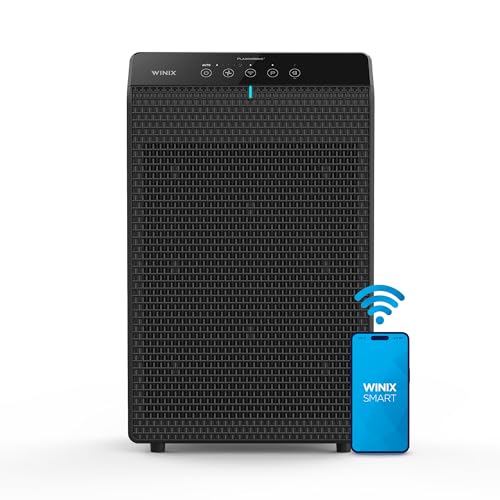
Winix 5520
4.6/5Honest downsides
No unit is perfect, and here’s what to actually expect:
- The app notifications are overly cautious. As mentioned above, expect a “replace soon” alert well before the filter is actually spent.
- It’s a room unit, not a whole-house solution. Odor reduction is strongest in the room it’s placed in. If litter box smell travels through a hallway into a living room, you’re better served by a small dedicated unit in the litter room plus this one in your main living space.
- The washable pre-filter still needs maintenance. “Washable” doesn’t mean “maintenance-free” - skipping the rinse for months at a time shows up repeatedly as a source of buyer regret in lower-starred reviews.
- The build is plastic, not the more premium-feeling materials on some pricier competitors. It is functional and not flimsy, but it feels lighter in the hand than metal-accented competitors.
- Replacement filters are Levoit-specific, meaning you’re committed to their filter ecosystem and pricing for the life of the unit - a minor consideration, but worth knowing before you buy rather than after.
A realistic first-week setup
Based on how owners describe getting the best results, here’s the sequence that tends to work:
- Measure the room first, not after - confirm it’s under the roughly 375 sq ft ceiling before you unbox anything.
- Place it within 3-5 feet of the litter box if odor is the primary complaint, angled so intake airflow passes near the box rather than being blocked by furniture.
- Start on auto mode for the first few days to get a baseline sense of how it responds to your household’s actual air quality swings (scooping, cooking, cleaning).
- Switch to a fixed manual speed if the auto mode’s ramping feels more aggressive or noisier than you’d like - this is the single most common tweak mentioned in otherwise-positive reviews.
- Rinse the pre-filter on a weekly schedule in multi-cat homes, monthly in single-cat homes, rather than waiting for a visible buildup.
Alternatives worth knowing about
- If the litter box lives in a small dedicated room rather than an open living space, our small air purifier for litter box room guide walks through why a compact unit placed close to the box usually outperforms a bigger one placed farther away.
- If ammonia smell (not just dust and dander) is your main complaint, read our dedicated air purifier for cat pee smell breakdown - carbon filter grade matters more there than CADR.
- Curious whether air purifiers solve litter smell at all, or if it’s mostly a litter and scooping-schedule problem? Our explainer on what purifiers can and can’t do for litter smell covers that honestly.
- For bigger multi-pet households, the Blueair Blue Pure 211i Max and the AirDoctor AD3500 below cover more square footage than any Levoit model in this comparison.
- Want the full deep-dive on this exact model, independent of the litter-smell use case - app quirks, sizing math, and the complete honest-downsides list? Read our Levoit Vital 200S review, or see how it stacks up directly against the Winix 5520 in our head-to-head comparison.
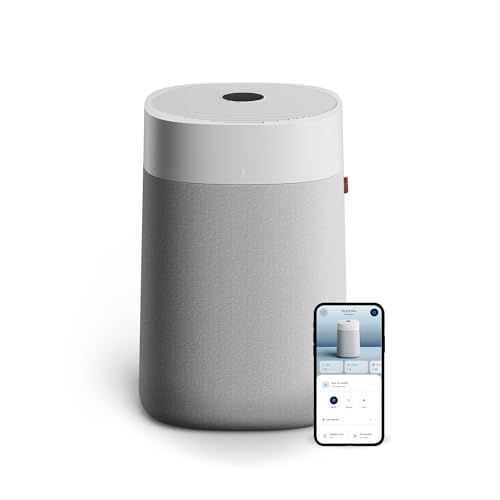
Blueair Blue Pure 211i Max
4.4/5
AirDoctor AD3500
3.3/5You’ll also see the HEAPETS P358 mentioned in some pet-owner forums and comparison threads. We don’t feature it in reviews on this site because the brand hasn’t made official product photography available - we’d rather leave a model out than run a review without a real image of it.
Browse the full cat air purifier hub for every guide in this silo, including litter-box-specific placement and cat pee odor breakdowns.
Frequently asked questions
Does the Vital 200S actually help with litter box smell?
Partially, and placement matters more than the marketing suggests. The activated carbon layer absorbs odor compounds, but for a dedicated litter box room, a unit placed within 3-5 feet of the box works far better than one across the room. Owners who placed it close report the biggest difference; owners who tucked it in a corner across the room report a much smaller one.
How often do you really need to replace the filter with cats?
Levoit lists 6-12 months for typical use. In multi-cat homes, owners more commonly report replacing the HEPA/carbon combo filter every 4-6 months, since dander and litter dust load it faster. The washable pre-filter is what keeps that number from being closer to 3.
Is it safe to run around cats 24/7?
Yes - it's a mechanical HEPA plus carbon unit with no ozone-generating ionizer, which is the detail to check for both cat and bird households. Some competing brands include an optional ionizer mode; on this unit, there isn't one to accidentally leave on.
Will one purifier handle smell from two litter boxes?
Based on the CADR math, a single Vital 200S can reasonably cover a room housing two boxes if the room is under roughly 360-388 sq ft (AHAM-verified - a little more headroom than Levoit's own marketing number suggests). For anything larger, or for boxes in two separate rooms, owners more often report running two smaller units (like the Core Mini-P) rather than one large one in a hallway.