Are Air Purifiers Safe for Birds?
Quick answer: yes, a purely mechanical HEPA and activated carbon air purifier is safe for birds - but it’s not the biggest air-quality risk in most bird-owning kitchens. That title goes to overheated non-stick (PTFE/Teflon) cookware. This piece covers three separate things that often get lumped together: PTFE fumes, ozone, and ionizers. They’re different risks with different solutions, and conflating them is how people end up worrying about the wrong one.
This question comes up more than almost any other bird-related topic, usually framed as a binary - “is X safe or not” - when the honest answer depends on which specific technology is inside the box. This guide walks through each one separately so you can make that call yourself rather than relying on marketing language that isn’t always precise about what a given unit actually does.
Why birds specifically are more at risk than other pets
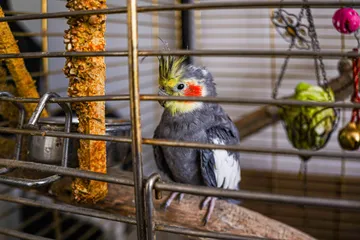
Bird respiratory systems work fundamentally differently from a cat’s, dog’s, or human’s. Mammals move air in and out of the lungs in a two-way cycle, with a portion of “dead air” left in the lungs between breaths. Birds instead move air through their lungs in a continuous, largely one-directional flow using a system of air sacs, extracting oxygen far more efficiently on every breath. That efficiency is a big part of what makes flight possible - but it also means airborne toxins are absorbed more completely and more quickly than they would be in a mammal breathing the same air. It’s the same underlying reason birds were historically used to detect dangerous gas buildup in mine shafts, long before electronic sensors existed: they show symptoms of exposure well before a human in the same air would notice anything.
This is genuinely useful context for evaluating any air-quality product for a bird household, not just purifiers - it’s why the bar for “acceptable risk” for a bird is different from the bar most people apply to their own health.
PTFE (Teflon) fumes: the risk that has nothing to do with your purifier
PTFE is the non-stick coating on a huge share of everyday cookware, and under normal cooking use it’s considered safe. The danger appears when a PTFE-coated pan is overheated - most commonly an empty pan left on a high burner, or a pan heated well beyond normal cooking temperatures. At that point it releases fumes that are essentially harmless to humans in the short term but are widely reported as acutely toxic to birds, due to how efficiently birds process air through their respiratory system. This is one of the most commonly cited preventable causes of sudden bird death in avian-care discussions, and it’s worth taking seriously regardless of what air purifier you own.
The practical takeaway: never leave non-stick cookware unattended on high heat in a home with birds, and consider switching to stainless steel or cast iron in the kitchen if a bird spends significant time there. An air purifier can help clear residual fumes from an already-ventilated room, but it’s not a substitute for avoiding the situation in the first place.
This also extends beyond pans to any PTFE-coated small appliance - certain heat lamps, space heaters, and iron soleplates can carry the same coating and the same overheating risk. If a bird’s cage is anywhere near a kitchen or a room with PTFE-coated appliances, good ventilation (a range hood that vents outside, or simply opening a window) during and after cooking is a more directly relevant safety step than anything related to the air purifier itself.
Ozone: why “activated” or “ionic” modes deserve scrutiny
Ozone is a reactive gas that’s a lung irritant at ground level for essentially all animals, and small birds - again, because of how efficiently their respiratory systems move air - are considered especially sensitive to it. Some air purifiers intentionally generate ozone as their primary cleaning mechanism (marketed with terms like “activated oxygen”); others produce it as an unintentional byproduct of ionizing technology. Either way, the presence of ozone is the thing to screen out, not a feature to look for, in a bird household.
Ozone generators are sometimes marketed for odor elimination or “deep cleaning” a room’s air, occasionally with claims about eliminating smoke smell or mold spores. Whatever the marketing angle, the mechanism is the same reactive gas, and the same caution applies. If you see a product description leaning on words like “activated oxygen,” “tri-oxygen,” or similar rather than plainly stating “HEPA filter” and “activated carbon filter,” treat that as a signal to look elsewhere for a bird household, regardless of how the rest of the marketing reads.
Ionizers: not automatically dangerous, but worth avoiding by default
An ionizer releases charged ions that cause airborne particles to clump together and settle out of the air faster. It’s a genuinely different mechanism from ozone generation, but many ionizing purifiers do produce some ozone as a side effect of that process, and the amount varies by model and isn’t always transparently disclosed. Because the downside (a bird more sensitive to ozone than any human in the house) is more severe than the upside (marginally faster particle settling), the simplest, most defensible choice for a bird household is a purely mechanical HEPA and activated carbon unit with no ionizing mode - which is exactly the type we recommend as a starting pick for bird owners.
It’s worth noting that ionizing technology isn’t universally banned or considered dangerous in every context - plenty of ionizing purifiers are sold and used safely in homes without birds. The caution here is specific to bird households, where the margin most people are comfortable accepting for themselves doesn’t necessarily translate to a much smaller, much more air-sensitive animal in the same room. If you already own an ionizing purifier and aren’t ready to replace it, the more conservative option is to keep the ionizing mode switched off entirely (most models allow this) and use it purely for its mechanical HEPA stage, if it has one.
Other bird-household air-quality risks, for context
Since this topic tends to generate more anxiety than it needs to, it’s worth putting air purifiers in context against other, more commonly cited risks in bird-owner communities:
- Aerosol sprays (air fresheners, hairspray, spray cleaners) used in the same room as a bird are more frequently flagged as a concern than air purifiers.
- Scented candles and wax warmers, particularly ones using synthetic fragrance oils, are a recurring caution in avian-care discussions.
- Self-cleaning oven cycles, which heat interior surfaces (sometimes PTFE-coated) to very high temperatures, are a well-known specific risk - birds are commonly recommended to be moved to a different, well-ventilated part of the home during a self-clean cycle.
- Cigarette and cooking smoke generally, which affects birds’ sensitive respiratory systems more acutely than it does humans in the same room.
A correctly chosen mechanical air purifier is, if anything, a mitigating factor against some of these risks (by filtering residual particulate) rather than an additional one - provided it’s the non-ionizing, non-ozone-generating type described above.
None of this is meant to minimize legitimate caution - it’s meant to help direct that caution toward the risks that actually carry the most weight. A household that’s rigorously screened out ionizing purifiers but still cooks regularly with unattended non-stick cookware near a bird’s cage has its safety priorities backwards. The single highest-value change most bird-owning households can make is kitchen-related, not purifier-related.
A simple decision framework
If you’re evaluating any air purifier for a home with birds, run it through these three questions:
- Does it have an ionizing mode, even an optional one? If yes, skip it or make sure that mode stays permanently off - and be aware that “off” isn’t always verifiable from the outside.
- Does it market itself using terms like “activated oxygen,” “ozone shock,” or similar? These are ozone generators by another name. Not appropriate for a home with birds.
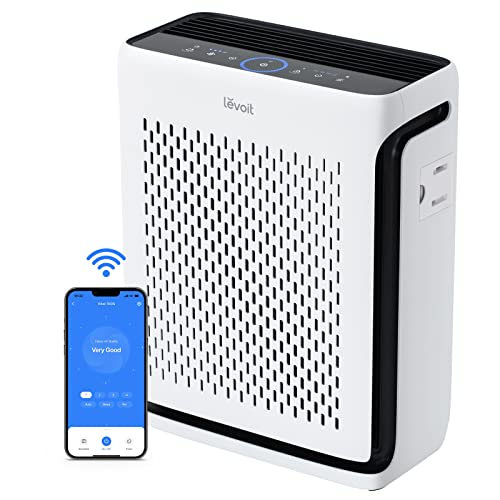
- Is it a straightforward HEPA + activated carbon mechanical filter? This is the category to default to. It has no ozone-generating mechanism at all, by design.
- Don’t take the marketing’s word for it - check CARB’s own certified device list. Every air purifier legally sold in the US has to be CARB-certified for ozone safety, and CARB classifies each one Mechanical or Electronic. We break down what that classification actually means (it’s not a safety pass/fail) and list the exact CARB record for all 9 models we recommend in our Mechanical vs. Electronic breakdown.
What this looks like in practice
Once you’ve ruled out ionizers and ozone generators, the remaining decision is just sizing and placement - covered in our Air Purifier for Bird Cage: Placement & Safety guide, and in the model comparison in Best Air Purifier for Birds. The purifier itself, once you’re in mechanical-filter territory, is one of the lower-risk items in a bird-friendly home - well behind cookware, scented candles, aerosol sprays, and self-cleaning oven cycles, all of which are more commonly cited safety concerns in bird-owner communities than a properly chosen air purifier.
Check Price on Amazon(paid link)
Browse every guide in this silo on the bird air purifier hub.
Frequently asked questions
What is PTFE and why is it dangerous for birds?
PTFE (polytetrafluoroethylene, commonly known by the brand name Teflon) is the non-stick coating used on many pans and small kitchen appliances. When overheated - typically well above normal cooking temperatures, such as an empty pan left on high heat - it releases fumes that are highly toxic to birds due to their extremely efficient respiratory systems. This is widely cited as one of the most common preventable causes of sudden death in pet birds, and it has nothing to do with air purifiers directly, but it's the single biggest air-quality risk in most bird households.
Do air purifiers themselves produce anything dangerous?
A standard mechanical HEPA and activated carbon purifier does not generate ozone or release particulates - it filters them out. The purifiers to be cautious of are ionizing models and dedicated ozone generators, covered below.
Is 'ozone-free' marketing language trustworthy?
Treat it with mild skepticism rather than as a guarantee. Ionizing technology inherently carries some risk of ozone byproduct, and independent verification of 'ozone-free' claims varies by brand. The simplest way to avoid the question entirely is to choose a purely mechanical HEPA and carbon filter unit with no ionizing mode at all.
Are essential oil diffusers or scented purifier add-ons safe around birds?
Generally not recommended. Birds' respiratory systems are sensitive to airborne aromatic compounds, and many essential oils used in diffusers are specifically flagged as risky around birds. This isn't an air purifier feature to seek out.