Best Air Purifier for Birds
The safest default pick - because of what it doesn't have
4.3/5⚠ Spec overstated: manufacturer claims 195 CFM, registry shows 143Best for: single-bird and multi-bird households where feather dust, dander, and cage-area odor are the main concerns.
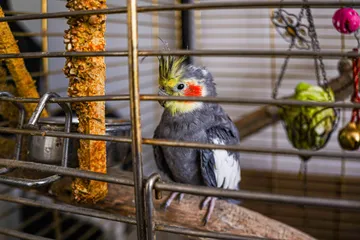
In a house with both birds and cats, the bird is the harder animal to shop for, not the cat. Bird respiratory systems are dramatically more efficient and more sensitive than ours; a fume level that’s a mild annoyance to a person can be dangerous to a bird. That single fact rules out entire categories of air purifiers before you even get to comparing CADR numbers.
Most air purifier buying guides are written with cats and dogs as the default pet, and the advice mostly carries over - filter type, sizing, placement. But the “which purifiers are actually off the table” question is genuinely different for birds, and it’s the part that’s easy to get wrong if you’re used to shopping for a general pet-owner household. This guide starts from that narrower, safety-first list and works outward to sizing and features.
Why the “no ionizer” rule matters more than any other spec
Ionizing air purifiers work by releasing charged ions that cause airborne particles to clump and fall out of the air. Many ionizers produce trace ozone as a byproduct of that process - and even units marketed as “ozone-safe” or “low-ozone” are a category that experienced bird owners and avian-focused sources widely steer away from, because a bird’s respiratory system processes air far more efficiently than a mammal’s, meaning it’s also more exposed to whatever’s in that air. The margin for error most people are comfortable with for themselves doesn’t necessarily apply to a bird in the same room.
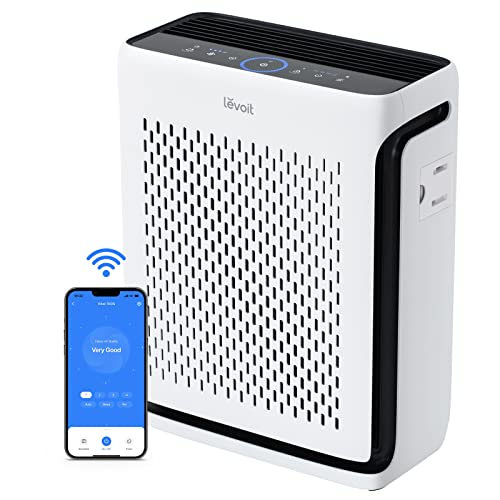
This is why the Vital 100S-P is our starting recommendation: it’s a straightforward HEPA-plus-carbon mechanical filter with no ionizing mode to accidentally leave switched on. We go much deeper on ozone, ionizers, and the separate (and more urgent) topic of PTFE/non-stick cookware fumes in Are Air Purifiers Safe for Birds? - if you take away one thing from that guide, it’s that an overheated non-stick pan is a bigger acute risk to birds than almost any air purifier on the market, purifier or not.
It’s worth being direct about why this matters more here than it does when picking a purifier for a cat or dog household: a bird’s respiratory system moves air through its lungs in a continuous, one-directional flow (rather than the in-and-out cycle mammals use), which makes it dramatically more efficient at extracting oxygen - and, as a side effect, dramatically more exposed to whatever else is in that air. It’s the same reason canaries were historically used to detect dangerous gas in mine shafts. A purifier that’s a defensible “probably fine” choice for a mammal-only household isn’t automatically an acceptable risk once a bird is in the room.
The 2/3 rule for bird rooms
Using the same math we apply across the site - CADR (CFM) should be at least two-thirds of the room’s square footage for a meaningful air-change rate - the Vital 100S-P’s AHAM-verified 143 CFM CADR (Levoit’s own site lists 195 CFM) covers a room up to roughly 215 sq ft, which comfortably handles most bedrooms where a single cage is kept. For an aviary room or a much larger open space, the higher-CADR Vital 200S (250 CFM AHAM-verified, ~375 sq ft ceiling) is worth considering instead, provided it’s still a non-ionizing model - which it is.
Feather dust is worth calling out specifically here, because it behaves a little differently from cat dander or dog hair in terms of filtration load. Powder-down species (cockatiels, cockatoos, and African greys among them) produce a fine, persistent dust that settles on surfaces throughout a room, not just near the cage - which is part of why proximity to the cage matters less for dust control specifically than it does for litter box odor in a cat household. The purifier is working on room-wide dust levels more than a single concentrated source.
What it costs to run
| Model | CADR (CFM) | 2/3-rule room ceiling | Filter cost/yr | Filter life |
|---|---|---|---|---|
| Levoit Vital 100S-P | 143 | ~215 sq ft | $40-80 | 6-12 months |
| Levoit Vital 200S-P | 250 | ~375 sq ft | $50-100 | 6-12 months |
Both use the same non-ionizing HEPA + carbon approach, just scaled for different room sizes. Neither carries the higher yearly filter cost of some premium ionizing or UV-based units marketed for “whole-home” air quality - which, for a bird room specifically, isn’t a tradeoff worth making given the safety concerns those categories can carry.
What bird owners actually report
- Feather dust reduction is the most-cited benefit, especially from owners of powder-down species like cockatiels and cockatoos, which produce noticeably more fine dust than many other pet birds.
- Noise near the cage is a real consideration in a way it isn’t for cat or dog households - several owners mention birds reacting to a purifier’s higher fan speeds with initial wariness, though most report the bird adjusting within a few days once it’s clear the unit isn’t a threat.
- Owners consistently emphasize keeping the unit a few feet from the cage, not right against it - both to avoid direct airflow stressing the bird and to leave room for normal cage maintenance access.
- Filter changes get logged more carefully in bird households than in cat or dog reviews we’ve read - likely because owners are already accustomed to careful monitoring of anything affecting air quality around a bird.
- Multiple owners specifically mention checking for an ionizer before buying, more so than we see in cat- or dog-focused reviews - a sign that bird owners as a group are more attuned to this specific spec than the average purifier shopper, likely because the stakes of getting it wrong are more widely discussed in bird-owner communities.
- A few reviews mention placing the unit on a timer or smart plug to run it more heavily during the day (when the bird is most active and cage maintenance happens) and lower overnight - a manual workaround for the lack of a built-in smart schedule.
Honest downsides
- No smart app or auto-mode - you set the fan speed manually, which some owners prefer for predictability but which lacks the convenience of app-based scheduling on pricier models.
- At the AHAM-verified 143 CFM, it’s not sized for a large dedicated bird room or aviary - size up to a higher-CADR non-ionizing model if your space exceeds roughly 215 sq ft.
- Like any HEPA + carbon unit, it needs consistent filter replacement to keep performing - a saturated carbon filter in a bird room is arguably more consequential than in other pet households, given how sensitive birds are to air quality generally.
- No timer or scheduling built in - if you want the unit to run on a schedule rather than continuously, you’ll need an external smart plug, as several owners describe doing.
Setting it up
- Confirm the room size against the 215 sq ft ceiling - measure rather than estimate, especially in open-plan spaces.
- Place the unit a few feet from the cage, angled to the side rather than pointed directly at it - see our full placement guide for the reasoning.
- Start on the lowest fan speed for the first several days and watch how the bird responds before increasing it.
- Set a recurring reminder for filter checks - Levoit rates the filter for 6 to 12 months; plan around the shorter end under typical single-bird use, and sooner still in multi-bird or heavier-dander households.
- Double-check there’s no ionizing mode hiding in a settings menu, even if the unit isn’t marketed around ionization as a headline feature.
None of this is meant to make bird ownership sound more complicated than it is - once a purifier is correctly placed, sized, and introduced, it fades into the household’s routine the same way it does for a cat or dog owner. The extra care up front is a one-time cost, not an ongoing one, and it’s worth it for the peace of mind of knowing the air quality decision was made deliberately rather than by default.
Related reading
- For exactly where to place a purifier relative to the cage, and other safety-first setup details, read Air Purifier for Bird Cage: Placement & Safety.
- For the full breakdown of ozone, ionizers, and PTFE/non-stick cookware risks specifically, read Are Air Purifiers Safe for Birds?.
- For the complete breakdown of this exact model - including how it compares to the rest of the Levoit lineup - see our Levoit Vital 100S review.
Browse every guide in this silo on the bird air purifier hub.
Frequently asked questions
Are air purifiers safe for birds in general?
Mechanical HEPA and carbon filter units with no ionizer and no ozone generation are considered safe by the bird-owning community and are the type most avian-focused sources recommend. The category to avoid is ozone generators and ionizing purifiers, covered in detail in our dedicated safety guide.
Why no ionizer specifically?
Ionizers work by releasing charged ions into the air, and many models produce trace ozone as a byproduct of that process. Bird respiratory systems are far more efficient - and far more sensitive to airborne irritants - than ours, which is why experienced bird owners widely avoid ionizing purifiers even when the ozone output is marketed as 'low.'
Does the Vital 100S-P handle bird dander and feather dust well?
Based on the filter specifications, yes - the HEPA layer is well suited to the fine particulate that feather dust produces, which matters most for cockatiels, cockatoos, and African greys (species known for heavier dander) report a noticeable reduction in visible dust on nearby surfaces.
Where should I place it relative to the cage?
Near the cage but not pointed directly at it - a few feet away, angled so airflow passes the cage rather than blasting the bird directly, which can cause stress. Our placement guide covers this in more detail.