Air Purifier for Bird Dander
A mechanical HEPA unit that keeps up with the dustiest common pet bird species
4.3/5⚠ Spec overstated: manufacturer claims 195 CFM, registry shows 143Best for: households with cockatiels, cockatoos, African greys, or other powder-down parrot species dealing with visible dust buildup near the cage.
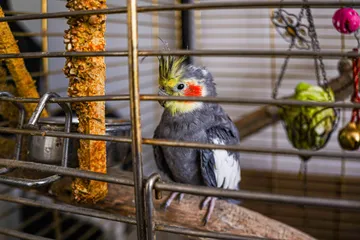
If you own a cockatiel, cockatoo, African grey, or a handful of other parrot species, you already know the specific kind of dust this article is about - the fine, almost powdery film that shows up on a dark shelf or TV screen near the cage within a day or two of wiping it down, no matter how often you clean. That’s powder down, and it behaves differently from typical pet dander in ways that change what to expect from an air purifier.
A cockatiel in a house that also has cats and a dog makes a useful side-by-side comparison, because it shows how much more constant powder-down dust is than cat or dog dander. It’s not that it’s a bigger problem - it’s a steadier one, and steady is actually the easier kind for a purifier to keep up with, provided the maintenance cadence matches.
What powder down actually is, and why it’s different from other pet dust
Powder down is a specialized feather type found in certain parrot species, distinct from a bird’s regular contour feathers. Rather than molting on a normal cycle, powder-down feathers continuously disintegrate at the tip into a fine keratin powder, which the bird spreads through its plumage during preening - it’s part of normal feather maintenance and waterproofing, not a sign of a health problem. Cockatiels, cockatoos, and African greys are the most commonly cited powder-down species among pet birds; budgies and canaries produce meaningfully less of it, which is part of why dust buildup varies so much between bird households even when cage size and cleaning habits look similar.
Mechanically, this dust is well within what a HEPA filter is built to catch - it’s a fine particulate, similar in size range to other airborne dander, and HEPA filtration is rated for particles far smaller than this. The difference isn’t whether the filter can catch it. It’s that powder down arrives continuously rather than in the batches typical of a shedding mammal, which changes the maintenance rhythm more than it changes the filtration requirement itself.
Why the pre-filter is the part that actually needs attention
As covered in more depth in our bird safety guide, the filtration technology itself isn’t the hard part here - a mechanical HEPA and carbon unit handles powder-down dust just fine. The practical challenge is the pre-filter stage clogging faster than the manufacturer’s suggested interval assumes, since that interval is calculated around more typical, intermittent shedding patterns rather than a continuous fine-dust source.
Owners in powder-down households consistently report checking the pre-filter on something closer to a weekly schedule - similar to what we see reported in multi-cat households in our cat litter smell pillar review - rather than the monthly cadence that’s more typical in a lighter-shedding home. Skipping this for a month tends to show up as reduced airflow and a unit that seems to be doing less, even though nothing is actually broken. It’s a maintenance rhythm question, not a product-quality one.
Placement: near the cage, never aimed at the bird
The core placement principle here is the same one covered in our bird cage placement and safety guide: near, but not aimed at the bird. A purifier positioned a few feet from the cage, angled so intake and exhaust airflow pass through the general area rather than blasting directly at the bird, captures dust effectively without creating a draft directly on the cage - which matters more for a bird than it would for a cat or dog, given how sensitive avian respiratory systems are to airflow and temperature swings. For the full reasoning behind that placement principle and how to introduce fan speed gradually, that guide covers it in detail rather than repeating it here.
Why “no ionizer” still matters, briefly
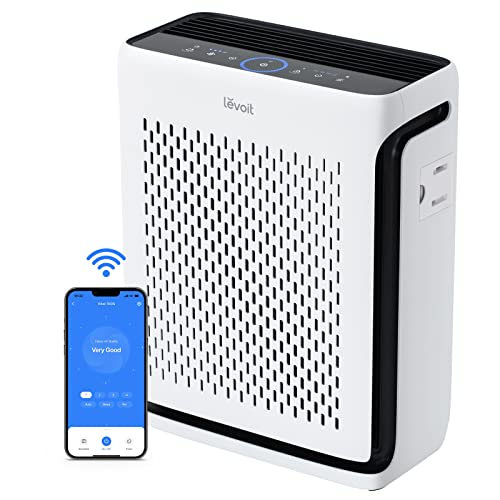
This is covered fully in our dedicated are air purifiers safe for birds guide, so only the short version here: any purifier in a bird household should be a purely mechanical HEPA and activated carbon unit, with no ionizing mode and no ozone-generating “activated oxygen” feature. The Vital 100S-P meets that bar by design - there’s no ionizing mode to accidentally leave switched on - which is the more relevant safety qualifier for a bird home than anything marketed as “bird-specific.”
What it costs to run
Filter economics for the Vital 100S-P, the single model we’re covering here:
| Model | CADR (CFM) | 2/3-rule room ceiling | Filter cost/yr | Filter life |
|---|---|---|---|---|
| Levoit Vital 100S-P | 143 | ~215 sq ft | $40-80 | 6-12 months |
In a powder-down household, expect the filter-life estimate to run on the shorter end of Levoit’s stated range, given the steadier dust load - closer to 6 months than 12 in homes with a cockatiel, cockatoo, or African grey generating dust continuously.
What bird owners specifically report
Two things matter more in a powder-down household than in a general pet home:
- “I can actually see the difference on the shelf” is the most common concrete observation - visible dust on dark surfaces near the cage is the most obvious, fastest-to-notice sign of the unit working, well before any air-quality-app number changes.
- Pre-filter rinsing frequency matters more here than in any other pet category. Powder down is produced continuously and coats the outer mesh faster than cat or dog hair does, and a coated pre-filter starves the HEPA stage of airflow.
- Placement complaints trace back almost entirely to distance, not the unit’s capability - owners who moved the purifier closer to the cage (while keeping airflow off the bird directly) report a clearer improvement than owners who left it across the room.
- A recurring comment from multi-bird or aviary-room households is that a single unit struggles to keep up with more than two or three powder-down birds in one space - worth sizing up or running more than one unit if that’s your setup, similar to the multi-pet sizing guidance we give for multi-cat homes.
Setting it up for a powder-down household
Based on how owners describe getting the best result with a powder-down species in the house, here’s a realistic sequence:
- Measure the room before placing anything. Use the 2/3 rule - CADR (CFM) should be at least two-thirds of the room’s square footage - the same math covered in our pillar review, and size up rather than down if you’re on the fence.
- Position it a few feet from the cage, angled away from direct airflow on the bird. The goal is proximity to the dust source without a draft hitting the cage itself.
- Start on a lower fan speed and increase gradually over a few days. Birds can be sensitive to sudden changes in ambient noise and airflow; a slow ramp-up is a lower-stress introduction than running full speed from day one.
- Check the pre-filter weekly for the first month, regardless of what the manual suggests, so you have your own baseline for how fast dust actually accumulates in your specific setup before settling into a longer-term schedule.
- Wipe down nearby hard surfaces on your normal cleaning schedule rather than expecting the purifier to eliminate visible dust buildup entirely - it reduces what’s airborne, not what’s already settled nearby.
Honest downsides
- Filter turnover runs faster than the stated interval suggests in a genuinely dusty powder-down household - budget for replacements closer to the 6-month mark, not Levoit’s full 12-month estimate.
- There’s no on-device confirmation that the ionizing mode is truly absent beyond the spec sheet - you’re trusting the listed design, which is standard across this category but worth knowing.
- It’s a general-purpose HEPA unit, not bird-marketed, so you won’t find bird-specific settings or messaging - which, again, is arguably a plus rather than a minus, since bird-specific marketing doesn’t reliably correlate with the one spec that actually matters (no ionizer).
- A single unit has real limits in a multi-bird aviary room - plan on sizing up or adding a second unit if you’re housing more than two or three powder-down birds in one open space.
Alternatives worth knowing about
- For the broader model comparison across bird households generally, not just powder-down species, our Best Air Purifier for Birds pillar guide covers the full picture.
- If you’re still deciding whether an ionizing or ozone-generating purifier is ever appropriate around a bird, Are Air Purifiers Safe for Birds? covers PTFE fumes, ozone, and ionizers in full.
- For exact placement distance and how to introduce fan speed without stressing a bird, see Air Purifier for Bird Cage: Placement & Safety.
Browse every guide in this silo on the bird air purifier hub.
Frequently asked questions
What is 'powder down' and why does it matter for air purifiers?
Powder down is a specialized type of feather, found on cockatiels, cockatoos, African greys, and several other parrot species, that continuously disintegrates into a fine, talc-like keratin dust as part of normal feather maintenance. It's a much steadier and finer dust source than typical mammal dander, which is why bird households with powder-down species tend to need more frequent filter maintenance than a typical cat or dog home.
Do budgies and canaries produce the same amount of dander?
No - budgies, canaries, and several other common pet bird species produce meaningfully less powder down than cockatiels, cockatoos, and African greys. If you're not sure which category your bird falls into, a quick way to tell is visible dust on dark surfaces near the cage within a day or two of cleaning; powder-down species make this obvious fast.
How often does the pre-filter need attention in a powder-down household?
Owners of powder-down species consistently report checking the pre-filter closer to weekly than monthly - a cadence more like a multi-cat household than a light-shedding one. Skipping it for a month tends to show up as reduced airflow and a purifier that seems less effective than it did initially.
Is this purifier bird-specific, or just a general HEPA unit that happens to work?
It's a general mechanical HEPA and activated carbon unit, not a bird-marketed product - and that's actually the safer choice. The relevant qualifier for a bird household isn't 'made for birds,' it's 'no ionizing mode, no ozone generation,' which this unit meets by design rather than by marketing claim.