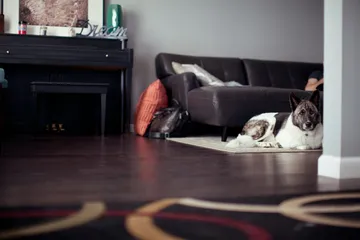
How to Stop Your House Smelling Like a Dog
Quick answer: an air purifier is one part of a five-part system, not a fix on its own. Based on manufacturer specifications and how odour sources behave, the households that report the biggest improvement combine a breed-appropriate bathing schedule, regular brushing, clean bedding, basic ear and paw care, and a correctly placed, carbon-forward purifier. Skip any one of those and the others have to work harder to compensate.
A dog whose particular talent is finding the one muddy puddle in a dry yard makes “wet dog smell” a weekly problem rather than a hypothetical one in a house. Here’s the actual system, in the order it matters.
The reason this guide leads with “system” rather than “product” is the same reason the cat-litter version does: the households that stay frustrated - the ones still saying “it still smells” - are almost always a household that bought a purifier and changed nothing else. A purifier asked to compensate for a six-week-overdue bath or a dog bed that’s never been washed is being asked to do a job it was never built for.
1. Skin oils and bathing schedule do more than people expect
“Wet dog smell” isn’t really about water - it’s about bacteria and yeast naturally present on the skin metabolizing sebum (natural skin oil), which produces volatile compounds that get released far more readily when fur is damp. That’s why a dry dog can smell mild and the same dog fifteen minutes after a walk in the rain can fill a room. A consistent bathing schedule, appropriate to the breed and coat, removes built-up oil and bacterial load at the source - this is the single biggest lever most households haven’t fully dialed in, more than any equipment purchase.
The nuance that trips people up: over-bathing can dry the skin, and a dog’s body sometimes responds to dry skin by producing more oil, which can paradoxically make the smell come back faster. There isn’t a universal “right” interval - a short-haired dog that doesn’t get muddy often needs far less frequent bathing than a double-coated dog that swims weekly - but consistency at whatever interval works for your dog’s coat and skin matters more than frequency alone.
2. Brushing and deshedding: the smell rides along with the loose coat
Loose undercoat trapped in fur holds onto oil and odor, and it sheds into the air and onto furniture whether or not you brush it out first. Double-coated breeds (Huskies, German Shepherds, Golden Retrievers, and similar) go through seasonal “coat blow” periods where shedding volume increases dramatically, and owners consistently report that odor complaints spike during exactly those windows - not because the dog suddenly smells different, but because there’s simply more oil-carrying material coming loose at once.
Regular brushing - daily during heavy shedding seasons, a few times a week otherwise - pulls that loose undercoat out before it distributes itself around the house. It’s the dog-specific equivalent of scooping a litter box regularly: unglamorous, easy to let slide, and the biggest single predictor of whether a household reports odor as “handled” or “constant.”
3. Bedding and furniture absorb odor the same way a litter box does
A dog bed, blanket, or the couch cushion a dog sleeps on soaks up skin oils and odor over time, the same way litter box plastic absorbs ammonia in a cat household. Washing the bed and any regularly-used blankets on a consistent schedule (weekly to biweekly for a dog that sleeps on it daily) removes a layer of built-up odor that no amount of purifier airflow reaches, because it’s embedded in fabric, not floating in the air.
This is the step people skip most often, for the same reason cat owners skip washing the litter box itself - fabric that’s been vacuumed or aired out doesn’t look obviously dirty. But oil works into fibers over weeks the same way ammonia works into scratched plastic, and a bed that’s genuinely due for replacement (matted, permanently oily-smelling even after washing) is sometimes the actual fix a purifier keeps getting blamed for not providing.
4. Ears and paws: localized odor a purifier can’t touch
Two commonly overlooked sources: ear canals (where yeast and bacteria can build up, especially in floppy-eared breeds) and paw pads (which have their own sweat glands and can develop a “corn chip” smell from normal bacterial activity, or a stronger one if there’s an issue). Neither is an air-quality problem - a purifier has no ability to reach a smell generated inside an ear canal or between paw pads. Routine ear cleaning (as recommended for the breed) and periodic paw checks are grooming and vet-care items, not purifier-adjacent ones, and it’s worth ruling them out specifically before assuming a lingering smell is a whole-room air-quality issue.
5. The purifier: carbon-forward, sized, and placed correctly
This is where the hardware comes in, and it’s genuinely effective once the first four steps are already handled. Two things matter most:
- Carbon stage quality, not just HEPA rating. Wet-dog odor is a gas-phase compound problem, not a particle problem - see HEPA vs Carbon Filters for Pet Odors for the full breakdown of why that distinction determines whether a purifier actually helps with smell at all.
- Proximity to the dog’s actual resting spot. A purifier placed near a bed, crate, or the couch a dog spends most of its time on outperforms one placed across the room by a wide margin, for the same reason placement matters near a litter box - odor concentration is highest right at the source.
What size purifier for what room
| Room size | Recommended CADR (2/3 rule) | Example |
|---|---|---|
| Small bedroom or crate nook (under 150 sq ft) | ~100+ CFM | Levoit Vital 200S-P |
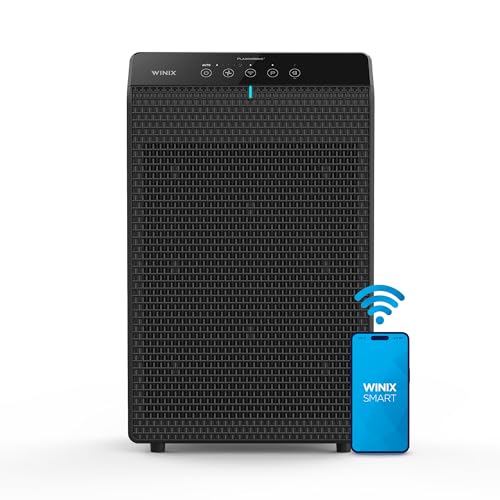
| 150-360 sq ft (living room, open den) | ~150-240 CFM | Winix 5520 |
| Large or open-plan living space, multi-pet homes | 300+ CFM | Blueair Blue Pure 211i Max |
For most single-dog households chasing odor specifically, the Winix 5520’s AOC carbon stage is the pick to lead with. For larger dogs, bigger open floor plans, or homes with a dog and one or more cats, the Blueair Blue Pure 211i Max’s higher CADR headroom is a better match for the bigger air-disturbance footprint a large-breed dog creates.
Check Price on Amazon(paid link)Putting it together: a realistic routine
- Bathe on a consistent, breed-appropriate schedule - don’t wait for the smell to prompt it.
- Brush several times a week normally, daily during seasonal shedding.
- Wash bedding and frequently-used blankets weekly to biweekly.
- Check ears and paws on a routine schedule, separate from bath day.
- Run the purifier continuously in the room your dog spends the most time in, positioned within a few feet of the bed or favorite spot.
What doesn’t actually help much
- Scented sprays and candles near the dog’s bed - they mask smell temporarily rather than removing the compounds causing it, and don’t address the oil buildup in bedding at all.
- Running the purifier on the far side of the house - the same placement math that applies to litter boxes applies here; distance from the source matters more than most people expect.
- A HEPA-only purifier with a thin carbon layer - it will help with hair and dust but do very little for wet-dog odor specifically, which is a carbon problem more than a particle one.
- Buying a bigger purifier instead of fixing the bathing or bedding routine. A recurring pattern in reviews is someone upgrading to a larger unit expecting it to fix a problem that was actually a bedding-cleaning or brushing-frequency issue, and being disappointed when the upgrade doesn’t move the needle much.
When it’s more than a routine problem
If you’ve addressed bathing, brushing, bedding, and purifier placement and the smell persists - or is unusually strong, or has suddenly changed - it’s worth ruling out a health issue rather than continuing to treat it as a routine problem. A specifically foul odor from the ears is a common sign of an ear infection. A strong yeasty or musty smell localized to one area of the skin (rather than general “dog smell” across the whole body) can indicate a skin condition. Both are veterinary questions, not air-quality ones, and no amount of bathing, brushing, or purifier placement resolves an underlying infection.
For the general cross-species version of this same “system, not product” approach, see How to Stop Your House Smelling Like Cat Litter, and for the fuller picture on which purifier feature matters for which kind of pet odor, Do Air Purifiers Help with Pet Odor? covers the pattern across cats, dogs, and general household use.
Browse every guide in this silo on the dog air purifier hub.
Frequently asked questions
What actually causes a house to smell like dog?
Mostly bacteria and yeast on the skin metabolizing natural oils (sebum), which gets much stronger when fur is damp. Saliva, ear and paw gland odor, and oils absorbed into bedding and furniture add to it. An air purifier addresses the airborne portion; the rest comes down to bathing, brushing, and bedding care.
Does bathing more often fix it?
Up to a point. Regular bathing on a schedule appropriate for the breed and coat type removes built-up oil and bacteria at the source. But over-bathing can dry the skin, which sometimes triggers the body to produce more oil in response - so the goal is a consistent, breed-appropriate schedule, not maximum frequency.
Can I just run a purifier instead of dealing with bathing and bedding?
You can run one, but owners who treat it as a full substitute for the routine factors are consistently the ones who report the purifier 'not working.' A purifier handles airborne odor molecules; it can't reach oil already absorbed into a couch cushion or a dog bed that hasn't been washed in months.
How do I know if it's normal dog smell or something that needs a vet?
Persistent, unusually strong, or suddenly-changed odor - especially a specifically foul smell from the ears, or a strong yeasty or musty smell localized to one area of the body - is a common sign of an ear infection or skin condition, not something bathing, brushing, or an air purifier will resolve. That's a veterinary question.