PuroAir 240: Manufacturer-Stated, Not Registry-Listed
The highest running cost on this site - know the number before you buy
2.8/5Best for: buyers who want its carbon-forward design and are going in with the real $162-216/yr running cost already factored in - not a pick to default into on sticker price or brand comparison alone.

The PuroAir 240 doesn’t have the brand history of a Levoit or Winix flagship, and its CADR isn’t AHAM Verifide-listed the way several other models on this site are - but it clears the same CARB ozone-safety certification (Mechanical type, EO G-21-288) that every legitimate brand has to, and it’s reviewed often enough, and specifically enough, to draw real patterns from. It’s positioned on this site as a carbon-forward alternative to the Winix 5520 - not the cheapest, not the biggest, but with a meaningfully shorter filter-replacement cycle that changes the cost math more than the spec sheet alone would suggest.
The filter-life number that doesn’t hold up
For a while, this section led with a rated 12- to 18-month filter life as a genuine advantage over the 6- to 12-month window most competitors in this price range fall into. Checking directly against PuroAir’s own product page and FAQ, that number doesn’t hold up: the manufacturer’s own primary, repeated guidance is to replace the filter every 3 months, or 90 days. A separate FAQ note allows a lighter-use range of 2 to 4 months, stretching to 6 in genuinely low-odor, single-cat households - but nothing on PuroAir’s own site supports 12 to 18 months as a realistic expectation for the household this site is written for.
That changes the unit’s cost position entirely. Rather than being one of the cheaper purifiers to run, at PuroAir’s own stated 3-month cadence it’s the most expensive filter to maintain of any model we track - worth knowing before comparing it on sticker price alone.
How it actually compares to the Winix 5520
Both units lead with a carbon-forward design rather than a HEPA-first one, which puts them in genuine competition for the same buyer: someone whose primary complaint is odor, not just dust and hair. The Winix 5520 has a meaningfully higher, AHAM-verified CADR (253 CFM vs. PuroAir’s manufacturer-stated 205) - and, once you use each manufacturer’s own replacement guidance, a meaningfully lower annual filter cost too. Winix’s filter is rated for about 12 months; PuroAir’s own site says 3. Even accounting for PuroAir’s lighter-use FAQ allowance, there’s no realistic cadence where the two land close together on yearly cost. We go deeper on the 5520 specifically in our dedicated Winix review - if annual running cost matters to you as much as odor control, that comparison is worth reading before you decide.
A newer brand, and what that actually means for you
It’s worth being direct about this rather than skating past it: PuroAir is a smaller, newer brand than Levoit or Winix, and unlike several other models on this site, its CADR hasn’t been independently verified through AHAM Verifide - the 205 CFM figure is manufacturer-published, not registry-confirmed. What it does have: CARB certification for ozone safety (Mechanical type, EO G-21-288), the same mandatory bar Levoit, Winix, and Blueair all clear too. A smaller brand disclosing the same verifiable safety record as the established names - rather than leaning on vague marketing claims - is a more meaningful trust signal than years on the market alone. If independently verified CADR specifically matters to you more than the spec sheet, that’s a reasonable, honest factor to weigh before buying.
What it costs to run
| Model | Role | CADR (CFM) | 2/3-rule room ceiling | Filter cost/yr | Filter life |
|---|---|---|---|---|---|
| PuroAir 240 | Highest running cost - read before buying | 205 | ~308 sq ft | $162-216 · sub. $121-162 | 3 months |
| Winix 5520 | Best for odor | 253 | ~380 sq ft | ~$80 | 12 months |
| Levoit Vital 200S-P | Best overall for cats | 250 | ~375 sq ft | $50-100 | 6-12 months |
The PuroAir’s per-year filter cost is the highest of this trio - and unlike the other two figures in this table, it reflects PuroAir’s own primary replacement guidance (every 3 months), not a stretched or worst-case estimate. Even in the lighter-use scenario PuroAir’s FAQ separately allows - up to 6 months, for a single cat with a lower odor load - the annual cost doesn’t come close to what’s shown here for the Winix 5520 or Vital 200S.
What owners actually report
- Odor control gets compared favorably to more expensive units by owners who researched alternatives first, a pattern that shows up specifically in reviews mentioning the Winix 5520 or pricier options by name.
- CADR limitations show up in larger-room reviews - at 205 CFM, owners trying to cover an open living/dining space report needing to run it on a higher, louder setting than they’d like to keep pace.
- A smaller minority of reviews mention build quality feeling less substantial than pricier, more established competitors - consistent with its position as a genuine mid-range, not premium, product.
- Multi-cat and heavier-odor households should plan around PuroAir’s own primary 3-month guidance, not the FAQ’s lighter-use allowance - which specifically assumes a single cat and a lower odor load than a litter-box room typically produces.
Noise, and how it compares to the bigger names
At 25-53 dB, the PuroAir 240’s noise range sits almost exactly where you’d expect for its CADR tier - comparable to the Levoit Core 300 and just a touch quieter at the top end than the Winix 5520. Noise behaves the same way it does across every purifier on this site: quiet enough to forget about on the lower speeds, a steady hum in the middle, more present on the top speed in a small room. Nothing in the noise reports specifically distinguishes it from its more established competitors, which is itself a useful data point - a newer brand matching, rather than falling short of, the noise performance of category leaders.
What buying from a smaller brand actually looks like in practice
Beyond the registry-verification caveat already covered, it’s worth addressing the practical side of buying from a less established name: warranty support and customer service responsiveness. Public information here is thinner than we’d like, which is itself part of the honest caveat - but among the reviews that do mention contacting support (for a defective unit or a filter question), the reported experience is generally described as responsive, without the pattern of complaints about unresponsive support that sometimes shows up with newer, smaller brands. That’s a reasonably encouraging sign, though it’s based on a smaller sample than we’d ideally want before making a strong claim either way.
Where it actually makes the most sense
Pulling the pattern together: the PuroAir 240 makes the most sense for a single- or two-cat household in a room under roughly 300 sq ft, where odor (not just dust) is the primary complaint, and where the CARB-certified ozone safety and carbon-forward design matter more than minimizing filter changes or annual cost. It makes less sense if a lower running cost or a longer brand track record matters more to you than the odor-control emphasis - the Winix 5520 beats it on both.
Video review
Independent video review by Fer's Reviews
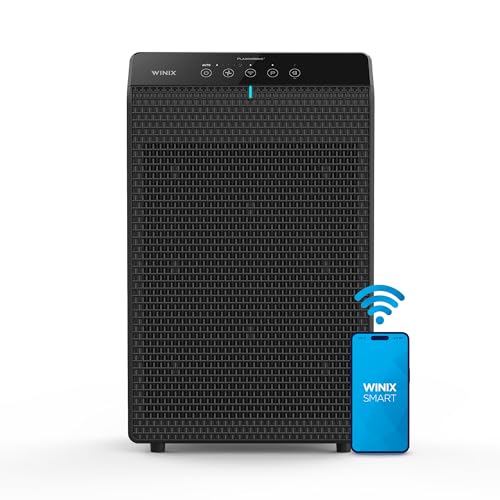
Winix 5520
4.6/5Honest downsides
- A shorter brand track record than Levoit or Winix, with fewer years and fewer total reviews to draw long-term confidence from.
- At 205 CFM, it’s not the right choice for a room much larger than roughly 300 sq ft - size up rather than expecting it to stretch further.
- The real filter cost is the highest of any model we track - $162-216/yr at retail, based on PuroAir’s own 3-month replacement guidance, not the 12-18 months previously published here. Budget for a filter change every few months, not once a year.
- Build quality is reported as reasonable but not premium - a fair tradeoff for the mid-range price point, but worth setting expectations around.
A realistic first-week setup
- Measure the room - confirm it’s under roughly 300-307 sq ft before assuming it’s the right fit.
- Place it within 3-5 feet of the odor source - the same proximity principle that applies across every carbon-forward unit we cover.
- Set a recurring reminder every 3 months, not once a year - PuroAir’s own replacement guidance is far shorter than a typical HEPA filter’s, and it’s easy to assume otherwise.
- In a multi-cat or heavier-odor household, don’t stretch toward the FAQ’s lighter-use allowance - plan around the 3-month figure as the realistic default.
- Compare directly against the Winix 5520 before buying - both the CADR difference and the real annual filter cost favor it, unless PuroAir’s specific carbon-forward design is a must-have for you.
Alternatives worth knowing about
- For a higher-CADR, more established, and considerably cheaper-to-run carbon-forward option, see our Winix 5520 review.
- For the full comparison of purifiers against litter additives, baking soda, and sprays as odor solutions, read Best Odor Eliminator for Cat Litter Smell.
- Still deciding whether a purifier is worth the ongoing cost at all? Our worth-it breakdown covers the full math.
Browse the full cat air purifier hub for every guide in this silo.
Frequently asked questions
How does the PuroAir 240 compare to the Winix 5520?
Both lead with carbon-forward odor control, but the real annual filter cost isn't close: the 5520's filter is rated for about a year, while PuroAir's own site repeats a 3-month replacement guideline as its primary guidance. Using each manufacturer's own numbers, the 5520 works out meaningfully cheaper to run per year, not the other way around - it also has a larger, AHAM-verified CADR (253 CFM vs. PuroAir's manufacturer-stated 205).
Is the PuroAir 240 a lesser-known brand worth trusting?
It's a smaller, newer brand than Levoit or Winix, which is a fair thing to weigh - but newer isn't the same as unverified. PuroAir's CADR isn't AHAM Verifide-listed, but the unit is CARB-certified for ozone safety (Mechanical type, EO G-21-288) - the same mandatory regulatory bar every brand on this site has to clear, big or small. A smaller brand disclosing the same verifiable safety record as the established names is a better trust signal than how long it's been on the market.
What size room does it actually cover?
At 205 CFM CADR, the 2/3-rule ceiling works out to roughly 307 sq ft, close to PuroAir's own 300 sq ft rating - a reasonably honest number that isn't meaningfully inflated in either direction.
How often does the filter actually need replacing?
More often than the box implies. PuroAir's own product page and FAQ repeat 'every 3 months or 90 days' as the primary guidance, with a secondary FAQ note allowing 2-4 months, or up to 6 in genuinely light, single-cat use. Multi-cat or heavier-odor households should plan around the 3-month figure, not the optimistic upper end.